
Thermally broken windows use an insulating separator between the outdoor and indoor sections of a metal frame. In an aluminum window, that separator slows heat flow through the frame. To choose a window for your project, compare the frame and glass together and check how the complete unit suits your climate.
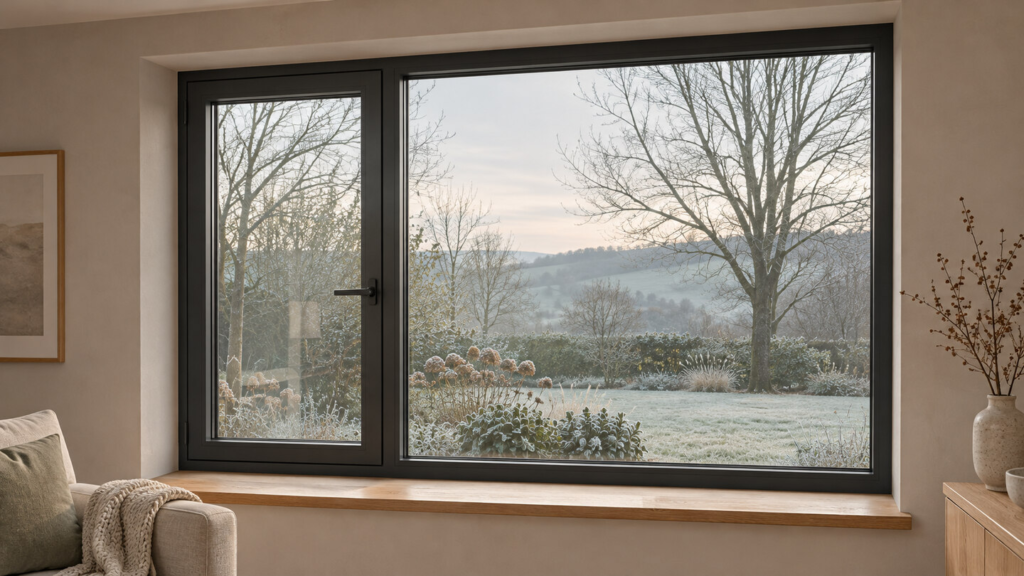
When to choose thermally broken windows
Start with rooms where glass takes up much of an outside wall or where people sit or work near a window. In a renovation, a draft at the sash or around the frame can also affect comfort. Ask the installer where the air is getting in so the quote covers the right work.
For a new build, add the project’s thermal targets to the window schedule early. If two suppliers propose different systems, ask both for the same set of ratings for the opening style and glass in their quote.
How a thermal break works
Aluminum conducts heat readily. In a continuous profile, heat can travel along the metal from one side of the frame to the other. A thermal break joins the two aluminum sections with a material that conducts heat more slowly. Many thermally broken aluminum windows use insulating strips for that connection.
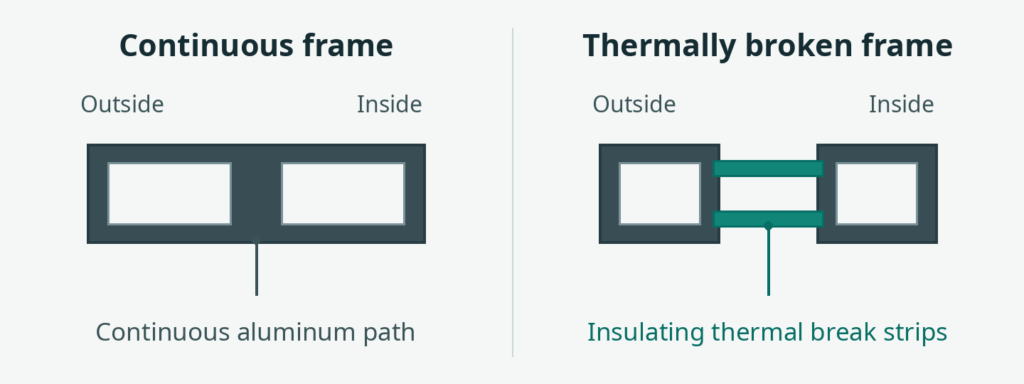
In winter, the break can help keep the indoor side of the frame warmer. When the outdoor air is hotter, it slows heat flow in the other direction. The result depends on the frame design and the rest of the window assembly.
Check the section through the frame
Ask for a section drawing through the frame and, for an operable window, the sash. Look for the location of the insulating strips and the position of the glass. Check the section for the opening style you are pricing, since a fixed pane and an opening sash can use different profiles.
If several windows share one opening, check the vertical members that join them as well. Ask how those sections connect to the frames and whether the thermal break continues at the joint.
For a product example, our 60 Series lists 18 mm insulating strips and double glazing with two 5 mm panes separated by a 15 mm cavity. See the specifications for the Lexia 60 Series casement window.
Compare glass and whole-window performance
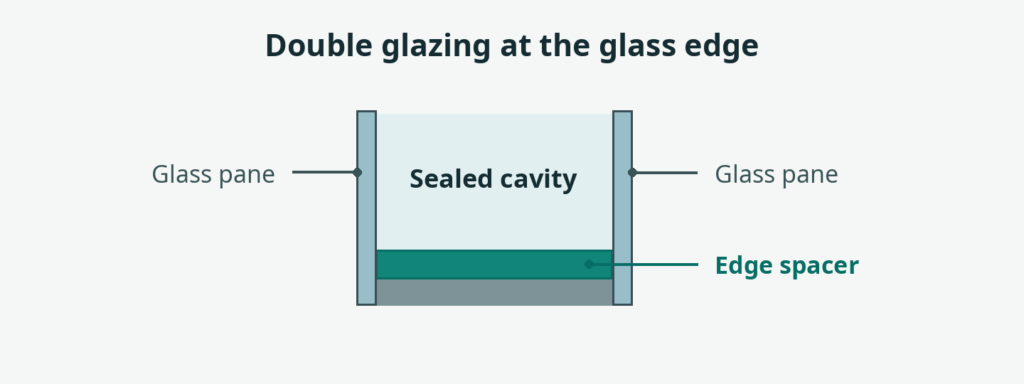
Double glazing creates a sealed space between two panes. A spacer holds the panes apart at the edge. Low-e (low-emissivity) coatings can change how heat moves through the glass and how much solar heat passes through it. Ask for the glass specification, including the coating, cavity and spacer.
Three ratings to compare
| Rating | What it measures | How to read it |
| Whole-window U-factor | Heat transfer through the window due to a temperature difference. | Lower means less heat transfer. |
| Solar heat gain coefficient (SHGC) | The share of solar energy that enters through the window. | Lower means less heat from the sun. |
| Visible transmittance (VT) | The share of visible light the window lets through. | Higher means more visible light passes through. |
A center-of-glass U-value describes the middle of the glazing. The whole-window U-factor includes the frame, the glazing and the glass edge. Compare whole-window values in the same units and under the same rating method.
For example, 0.28 Btu/(h·ft²·°F) is about 1.59 W/(m²·K). Check the reference window size on the rating sheet too.
Ask which frame series, opening style and glass configuration the rating covers. For an overview of the ratings, see the U.S. Department of Energy’s guide to energy-efficient windows..
Choosing thermally broken windows by climate
Cold winters
Compare whole-window U-factors first when heat loss is a priority. When warm, moist indoor air meets a cold frame or pane, moisture can collect on the surface. A warmer indoor frame can reduce that risk. Indoor humidity, ventilation and the installation detail around the frame also matter.
Strong sun and hot afternoons
Look at SHGC alongside U-factor when a room receives strong sun. A lower SHGC admits less solar heat. For a west-facing living room with large windows, check the direct sun and shade during the hours the room is used.
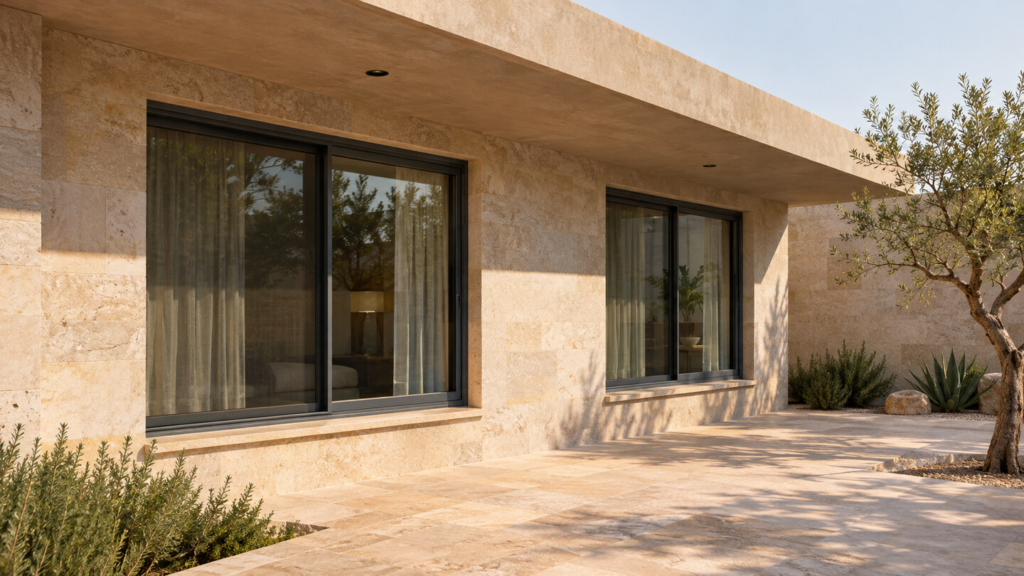
A deep overhang can shade the glass when the sun is high. Low afternoon sun can reach under it, so use the elevation and any shading details to review which windows need solar-control glazing.
If reducing solar gain is a priority, compare visible transmittance at the same time. For a room that needs daylight, ask to see glass samples alongside the performance data.
What to send for an aluminum window quote
Start with your window schedule and elevations. The schedule gives the size and quantity for each opening. The elevation shows the fixed panes and operable sashes the supplier needs to price.
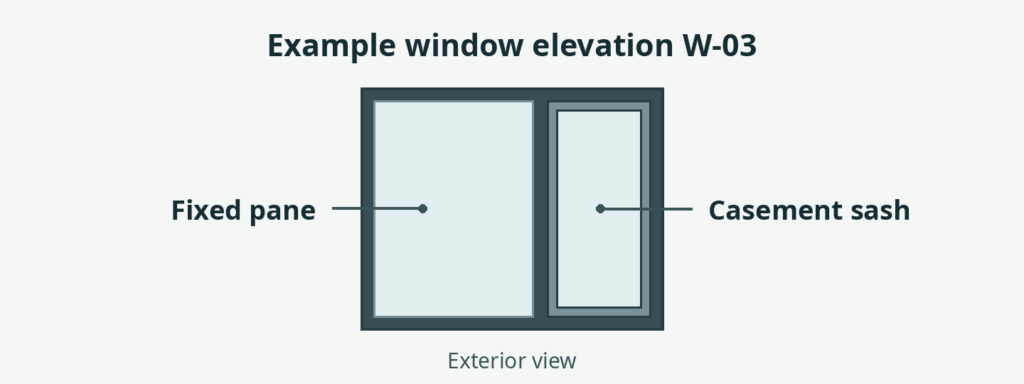
For example, you could write “W-03, Toronto, Canada. Planned rough opening 1,500 × 1,200 mm. Fixed pane on the left and outward-opening casement on the right, viewed from outside. Please quote a thermally broken aluminum frame with double glazing and share the applicable whole-window ratings.”
- Project city and country, plus any thermal performance or testing requirements in the specification.
- Window IDs, quantities and width × height. Label each dimension as a rough opening or an overall frame size.
- Fixed and operable sections, the viewing side of the drawing and the opening direction for each sash.
- Glazing, finish and screen preferences. Share any target U-factor and SHGC, with the U-factor units.
Send us your drawings, sizes, or site photos. Include the window schedule if you have one.
If you still need to check the sizes, use our window opening measurement guide.